
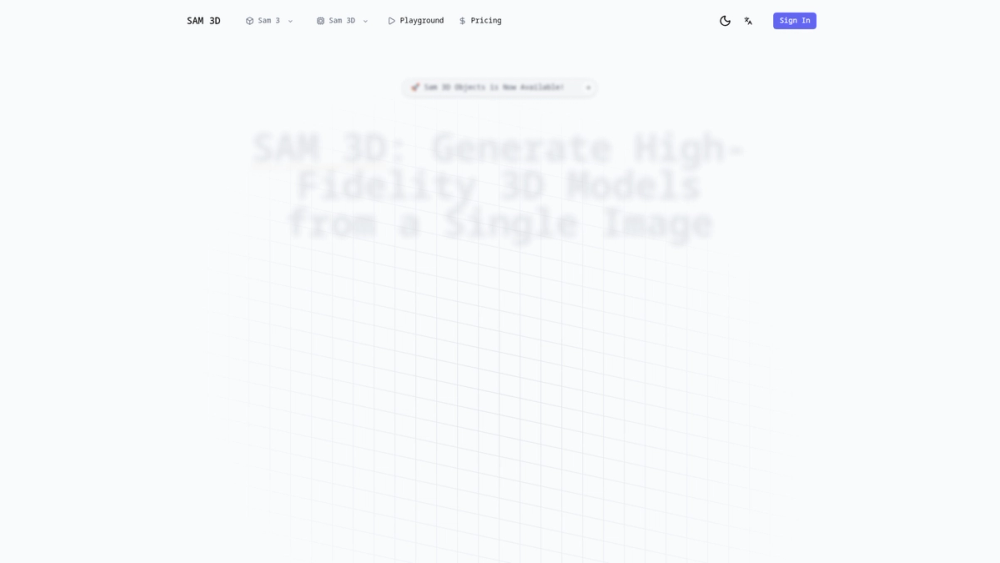
SAM 3D is an advanced online platform that leverages artificial intelligence to convert 2D images into high-quality 3D models. Its primary purpose is to simplify and accelerate the 3D creation process, making it accessible to users without specialized modeling skills or expensive software. By uploading a single image of an object or a human, users can automatically generate a detailed, textured 3D asset ready for use in various digital applications.
The key benefit of SAM 3D lies in its efficiency and accessibility. It dramatically reduces the time and cost associated with manual 3D modeling, empowering a wide range of users, including game developers, AR/VR creators, e-commerce store owners, digital artists, and hobbyists. The platform's value stems from its ability to democratize 3D content creation, enabling anyone to produce realistic assets for immersive experiences, product visualization, and personalized digital avatars with just a few clicks.
Features
- Single Image to 3D Conversion: Transforms a single 2D photograph of an object into a complete, 360-degree 3D model, capturing its shape and volume.
- Human Body Reconstruction: Features a specialized algorithm designed to accurately reconstruct 3D models of human bodies from photos, capturing posture and form for creating digital avatars or characters.
- High-Quality Texture Generation: Automatically creates and maps realistic, high-resolution textures onto the generated 3D model based on the colors and details from the source image.
- Web-Based Platform: Operates entirely online, eliminating the need for software installation or powerful local hardware. Users can access the service from any modern web browser.
- Developer API: Offers an API for developers to integrate the image-to-3D conversion technology directly into their own applications, websites, or automated workflows.
- Fast Processing: Utilizes powerful cloud-based AI to process images and generate 3D models in a matter of minutes, significantly speeding up the creative pipeline.
- GLB Export Format: Allows users to download the final 3D models in the
.glbformat, which is highly compatible with web viewers, game engines (like Unity and Unreal Engine), and 3D editing software.
How to Use
- Navigate to the Website: Open your web browser and go to the SAM 3D homepage.
- Select a Conversion Mode: Choose the appropriate mode for your image, typically between "Object" for inanimate items and "Human Body" for people.
- Upload Your Image: Click the upload button and select a clear, well-lit image from your device. For best results, use a photo with a neutral background where the entire subject is visible.
- Start the Generation: Initiate the conversion process by clicking the "Generate" button. The AI will begin analyzing the image and constructing the 3D model.
- Preview and Inspect: Once the process is complete, an interactive 3D preview of your model will appear on the screen. You can rotate and zoom to inspect it from all angles.
- Download the Model: If you are satisfied with the result, click the download button to save the 3D model as a
.glbfile to your computer.
Use Cases
- E-commerce Product Visualization: Online retailers can convert standard product photos into interactive 3D models, allowing customers to view products from every angle, which can increase engagement and sales.
- Indie Game Development: Game developers, especially those on a tight budget, can quickly create 3D assets like characters, props, and environmental objects without extensive manual modeling.
- AR/VR Content Creation: Creators can produce realistic 3D assets for use in augmented reality apps and virtual reality environments, making experiences more immersive and interactive.
- Personalized Digital Avatars: Users can generate a 3D avatar of themselves from a single photo for use in games, virtual meetings, or social VR platforms.
FAQ
What kind of images produce the best results?
For optimal results, use a high-resolution, well-lit photograph taken straight-on. The subject should be fully in frame with a simple, contrasting background. Avoid blurry images, strong shadows, or complex, cluttered backgrounds.
How long does it take to generate a 3D model?
Processing time typically ranges from a few minutes to several minutes, depending on the complexity of the image and the current server load. You will be able to see the progress on the website.
What file format can I download my model in?
The primary export format is .glb, which is a standard and efficient format for sharing 3D models. It is widely supported by web applications, 3D software like Blender, and game engines.
Is the service free to use?
SAM 3D typically offers a free trial or a limited number of free credits for new users to test the platform. For more frequent or commercial use, you will likely need to subscribe to a paid plan or purchase credits.
Can I edit the 3D model after I download it?
Yes. The downloaded .glb file can be imported into most 3D modeling software (e.g., Blender, Maya, 3ds Max), where you can further refine the mesh, adjust textures, rig it for animation, or integrate it into a larger scene.
Does it work for any object?
The technology works best with solid, opaque objects with clear shapes. It may have difficulty with transparent (glass), highly reflective (chrome), or very thin and intricate objects (e.g., plants, chain fences).
Can I use multiple images of the same object?
While the primary feature highlighted is single-image conversion, some advanced photogrammetry services (which SAM 3D's technology is related to) can use multiple images for higher-detail results. Check the platform's specific instructions for any multi-image capabilities.